
Why Chiller Rooms Commonly Fail in UAE Climate Conditions
Table of Contents
Engineering Realities Behind Cold Room Performance Problems
Chiller rooms operating in the United Arab Emirates face environmental stresses that are fundamentally different from those encountered in moderate climates. While refrigeration systems are designed to remove heat from enclosed spaces, their efficiency and reliability are heavily influenced by external conditions.
In the UAE, extreme ambient temperatures, high humidity, airborne dust, and coastal air exposure create persistent challenges for any cold room chiller unit, cold storage chiller unit, or large-scale cold store chiller installation.
Failures are therefore rarely accidental. Most breakdowns originate from predictable interactions between:
• Environmental heat loads
• System design assumptions
• Airflow behaviour
• Insulation integrity
• Maintenance discipline
Understanding these mechanisms is essential for operators of industrial cold rooms, supermarkets, food processing facilities, and logistics warehouses where temperature stability directly impacts product safety and operating costs.
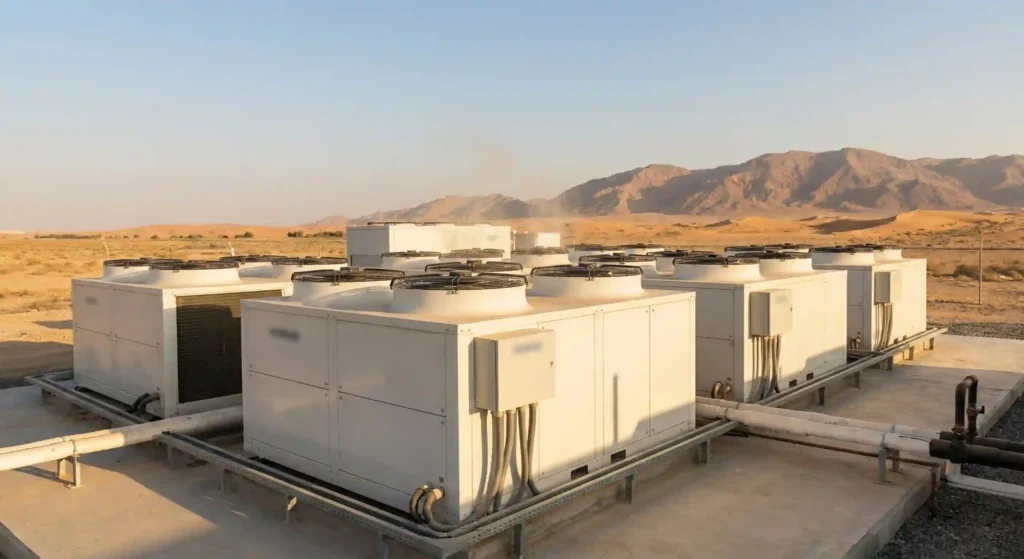
Why UAE Conditions Create Higher Failure Risks
Refrigeration systems function by extracting heat from a cooled space and rejecting it through condenser coils. This process depends on temperature differential. As outdoor temperatures rise, heat rejection efficiency declines.
During peak UAE summers, where ambient conditions frequently exceed 45–50 °C, systems encounter:
✔ Reduced condenser efficiency
✔ Elevated discharge pressures
✔ Longer compressor operation cycles
✔ Increased electrical consumption
Under such conditions, compressors often run for extended periods simply to maintain target temperatures. This behaviour is not necessarily a defect — it is the system responding to extreme thermal demand.
However, prolonged operation increases mechanical stress, internal heat buildup, and component wear.
Temperature Fluctuations Inside Chiller Rooms
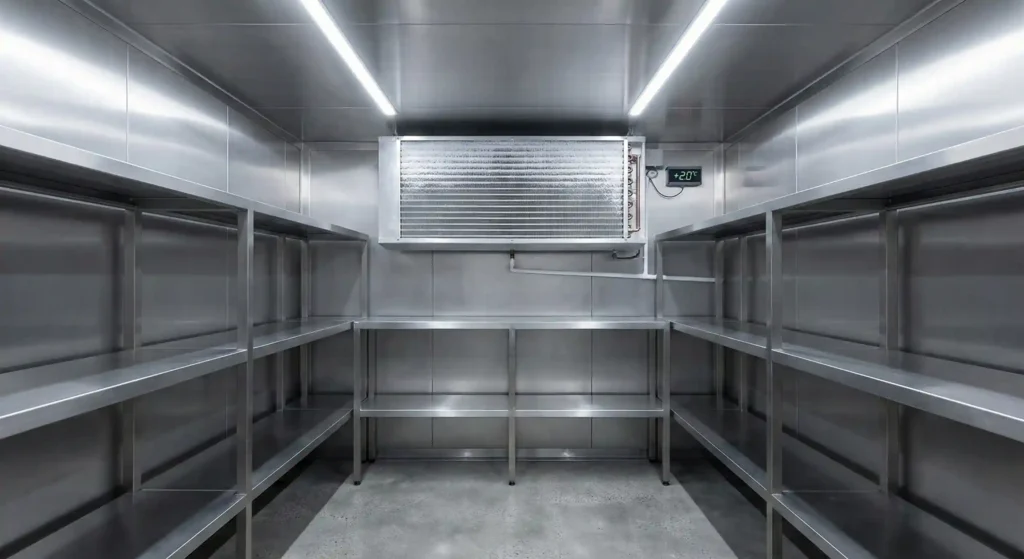
Stable chiller rooms should maintain consistent internal temperatures. When fluctuations occur, the root cause is typically systemic rather than sensor-related.
Common contributors include:
• Uneven airflow distribution
• Ice accumulation on evaporators
• Heat infiltration through structural gaps
• Improper capacity planning
Airflow disruptions are especially problematic inside a walk in chiller room, where poor circulation creates localized hot and cold zones. Even when cold store chillers operate correctly, airflow imbalance can produce misleading temperature readings.
Chiller Room Not Maintaining Set Temperature
Insulation integrity forms the foundation of chiller room efficiency.
High-quality chiller room panels are designed to create a continuous thermal envelope. However, small installation errors can compromise performance:
• Panel joint gaps
• Damaged vapor barriers
• Improper sealing
• Moisture infiltration
Once humidity penetrates insulation cores, thermal resistance collapses. Panels begin conducting external heat into the room, forcing the cold room chiller unit to operate longer.
Typical warning signs:
✔ Persistent condensation
✔ Frost patterns
✔ Rising energy usage
Insulation Failure & Chiller Room Panels
Insulation integrity forms the foundation of chiller room efficiency.
High-quality chiller room panels are designed to create a continuous thermal envelope. However, small installation errors can compromise performance:
• Panel joint gaps
• Damaged vapor barriers
• Improper sealing
• Moisture infiltration
Once humidity penetrates insulation cores, thermal resistance collapses. Panels begin conducting external heat into the room, forcing the cold room chiller unit to operate longer.
Typical warning signs:
✔ Persistent condensation
✔ Frost patterns
✔ Rising energy usage
Excessive Power Consumption
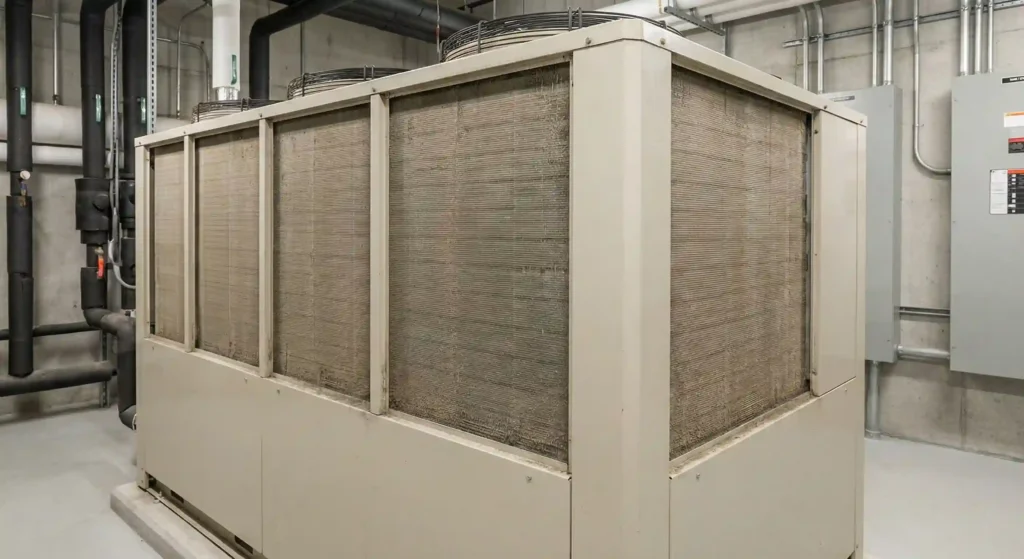
Elevated electricity usage is a classic indicator of declining refrigeration efficiency.
In UAE facilities, the dominant cause is condenser coil contamination.
Dust and sand accumulation reduce heat rejection efficiency, increasing compressor workload and amperage draw. This issue is extremely common in commercial cool rooms and outdoor condenser installations.
Ice Build-Up & Frost Formation
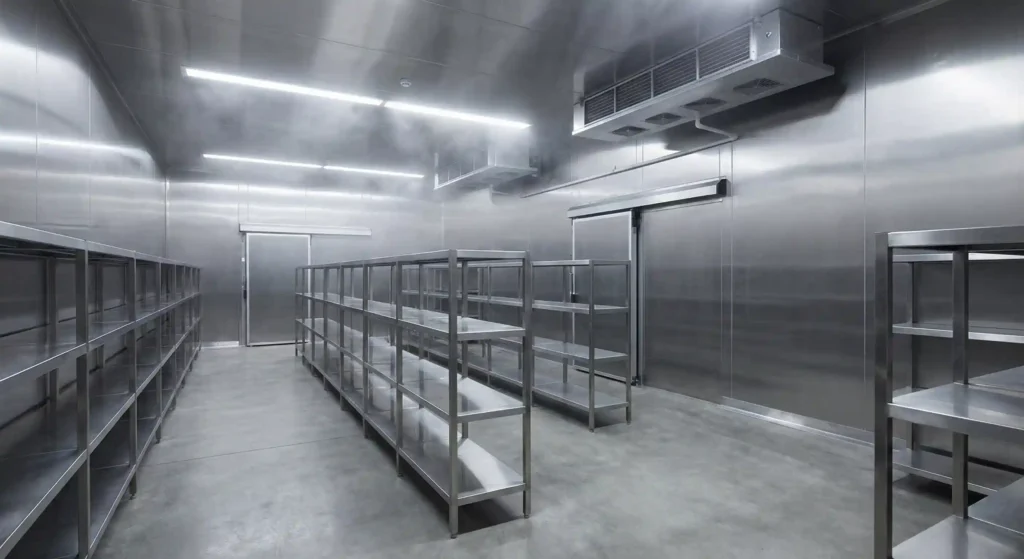
Ice formation inside a walk-in cooler is rarely caused by excessive cooling capacity. In most UAE facilities, it results from humidity infiltration and moisture condensation.
When warm, moisture-laden air enters the cooled space, water vapor condenses and freezes on evaporator coils. Frost accumulation restricts airflow, reduces cooling efficiency, and increases compressor stress.
Typical causes include:
• Frequent door openings
• Worn or damaged door gaskets
• Poor door alignment
• Defrost cycle malfunctions
Unchecked ice build-up destabilizes temperatures and increases energy consumption.
Compressor Stress & Failures
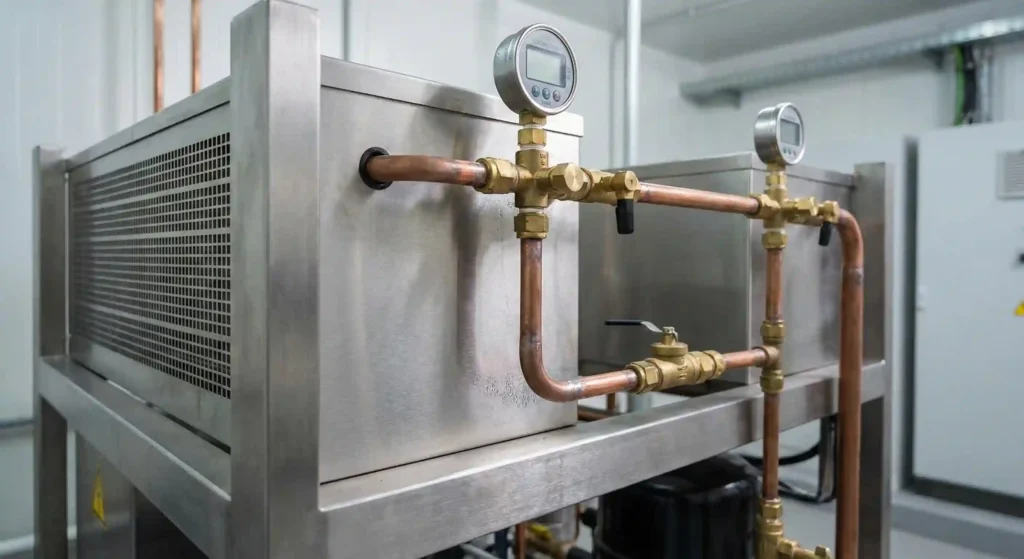
Compressors operate under elevated stress in UAE environments due to:
✔ High ambient heat
✔ Increased head pressure
✔ Extended duty cycles
✔ Electrical variability
When heat rejection efficiency drops, compressors work harder to circulate refrigerant, accelerating wear and shortening lifespan.
Poor Airflow Problems
Airflow is fundamental to uniform cooling.
Common failure sources:
• Ice-restricted evaporators
• Obstructed air pathways
• Fan motor degradation
• Poor storage layout
Inside industrial cold rooms, improper product stacking frequently disrupts return air circulation, leading to uneven cooling.
Door Leakage & Infiltration Losses
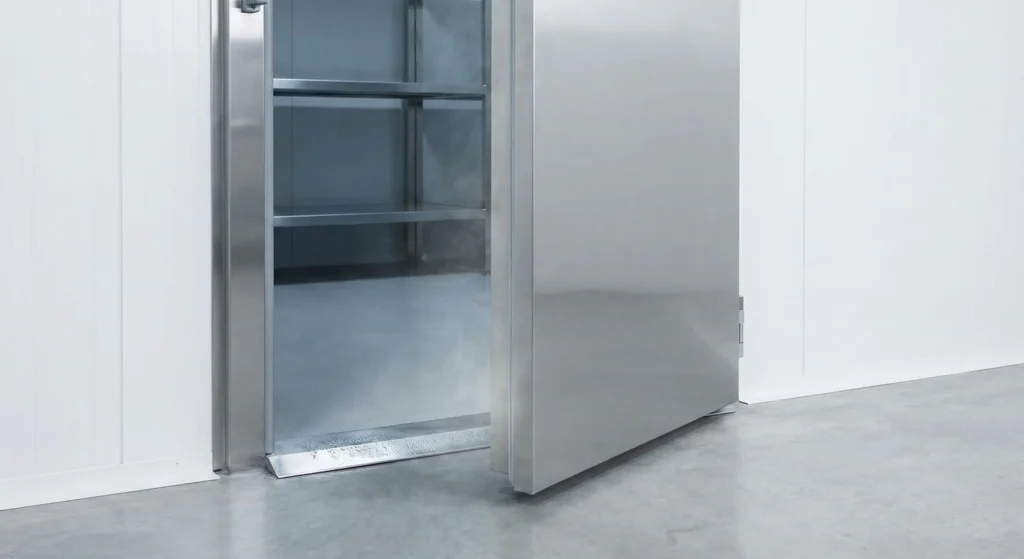
Doors represent the single largest pathway for heat and moisture ingress.
Seal failures allow humid air infiltration, increasing latent heat load and frost formation. High-traffic environments are especially vulnerable.
Design Mistakes in UAE Installations
Many failures originate at the design stage.
Frequent issues include:
✔ Incorrect cooling load assumptions
✔ Moderate-climate equipment selection
✔ Improper ventilation design
✔ Insufficient insulation specification
Facilities that work with the Best Chiller Room Manufacturers in UAE typically avoid these issues because systems are engineered for Gulf conditions.
Installation & Material Defects
Even correct designs fail under poor execution.
Typical installation problems:
• Misaligned panels
• Inadequate sealing
• Refrigerant charging errors
• Pipe insulation defects
Selecting a reliable Chiller Room Supplier in UAE reduces these risks significantly.
Specialised Environments With Higher Sensitivity
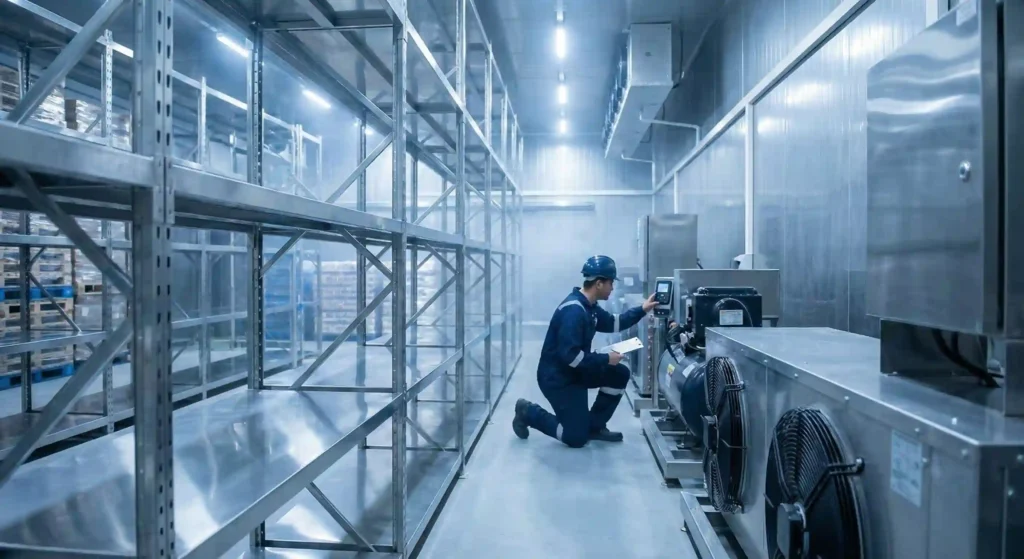
Certain refrigeration applications demand tighter engineering control:
• Blast Chiller room installations
• Portable room chiller setups
• Customised Chiller systems
• High-load storage facilities
These environments are more sensitive to airflow imbalance, insulation defects, and humidity ingress.
Early Warning Signs Facility Operators Should Monitor
Chiller room failures rarely occur without indicators:
✔ Rising power consumption
✔ Uneven cooling behaviour
✔ Excessive frost accumulation
✔ Extended compressor cycles
✔ Unusual mechanical noises
Early intervention dramatically lowers repair costs.
Prevention Strategies That Work in UAE Conditions
Reliable performance requires climate-aware system management:
✔ Maintain condenser cleanliness
✔ Protect insulation integrity
✔ Control door infiltration
✔ Ensure proper airflow circulation
✔ Monitor electrical stability
✔ Schedule preventive maintenance
Facilities partnering with the Best Chiller Room Manufacturers in UAE benefit from designs built for extreme ambient conditions rather than adapted solutions.
However, system performance is ultimately determined by the combined effect of design, installation accuracy, and operational conditions.
Frequently Asked Questions (FAQs)
Extreme ambient heat reduces condenser heat rejection efficiency, forcing compressors to operate under higher pressure ratios. This increases mechanical workload and energy consumption. Prolonged exposure to such conditions accelerates component wear and raises failure probability.
Yes. Dust and sand particles accumulate on condenser coils, forming insulating layers that restrict heat transfer. As heat rejection declines, compressors must run longer, increasing electrical draw and thermal stress. Over time, this significantly impacts efficiency and reliability.
Ice formation typically results from humidity infiltration rather than excessive cooling. Moist air entering through door gaps or frequent openings condenses and freezes on evaporator surfaces. This restricts airflow and destabilizes temperature control.
Significantly. Compromised insulation allows continuous heat infiltration, increasing system load. Compressors must operate longer to maintain setpoint temperatures, leading to higher electricity usage and reduced equipment lifespan.
Airflow ensures uniform temperature distribution and efficient heat exchange across evaporator coils. Poor circulation creates localized hot zones and uneven cooling behaviour. It also contributes to frosting and performance instability.
They can be reliable when insulation quality, ventilation design, and system sizing are correctly engineered. Failures usually arise from thermal leakage and improper airflow management. Environmental exposure further amplifies performance risks.
Much more frequently than in moderate climates. UAE environments expose condensers to persistent dust contamination, rapidly reducing heat rejection efficiency. Regular cleaning prevents compressor overload and energy waste.
Yes. Warm humid air infiltration increases latent heat load and compressor duty cycles. This leads to higher mechanical stress, unstable cooling performance, and accelerated wear.
High-load and low-temperature environments such as blast freezers, customised systems, and large cold storage rooms demand precise thermal and airflow engineering. Small design errors in these setups produce disproportionate failures.
Thermal and humidity infiltration through compromised envelopes, particularly doors and insulation joints. These losses are often invisible yet dramatically increase system load, energy consumption, and failure risk.
