
Durable Cold Storage Warehouse in UAE
Temperature-controlled warehousing solutions for food, retail, pharmaceutical, and distribution businesses across Dubai, Abu Dhabi, and Sharjah.
Why Choose Our Cold Warehouse
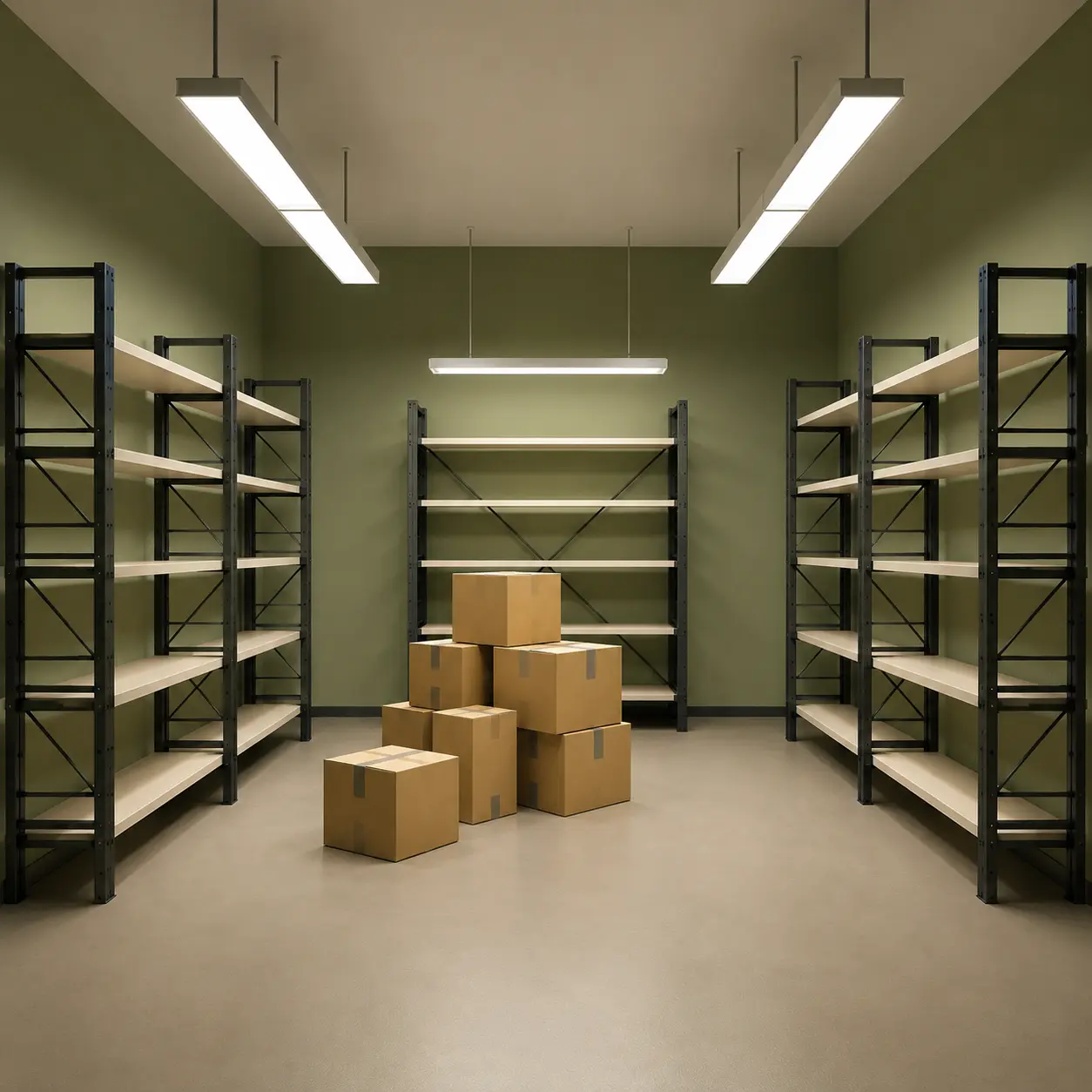
A well-designed cold storage warehouse in the UAE is more than refrigerated space. Storage layout, airflow management, loading access, insulation quality, and refrigeration balance all affect operational performance and product protection. ChillerRoom.ae designs cold storage warehouse solutions around daily operational needs, including pallet handling, inventory movement, loading and unloading, and multi-temperature storage workflows for commercial and industrial businesses.
- Multi-temperature warehouse storage
- Efficient pallet movement and storage layout
- Stable cooling in UAE heat conditions
- Built for food, cold chain, and distribution operations
Engineered for UAE Warehouse Conditions
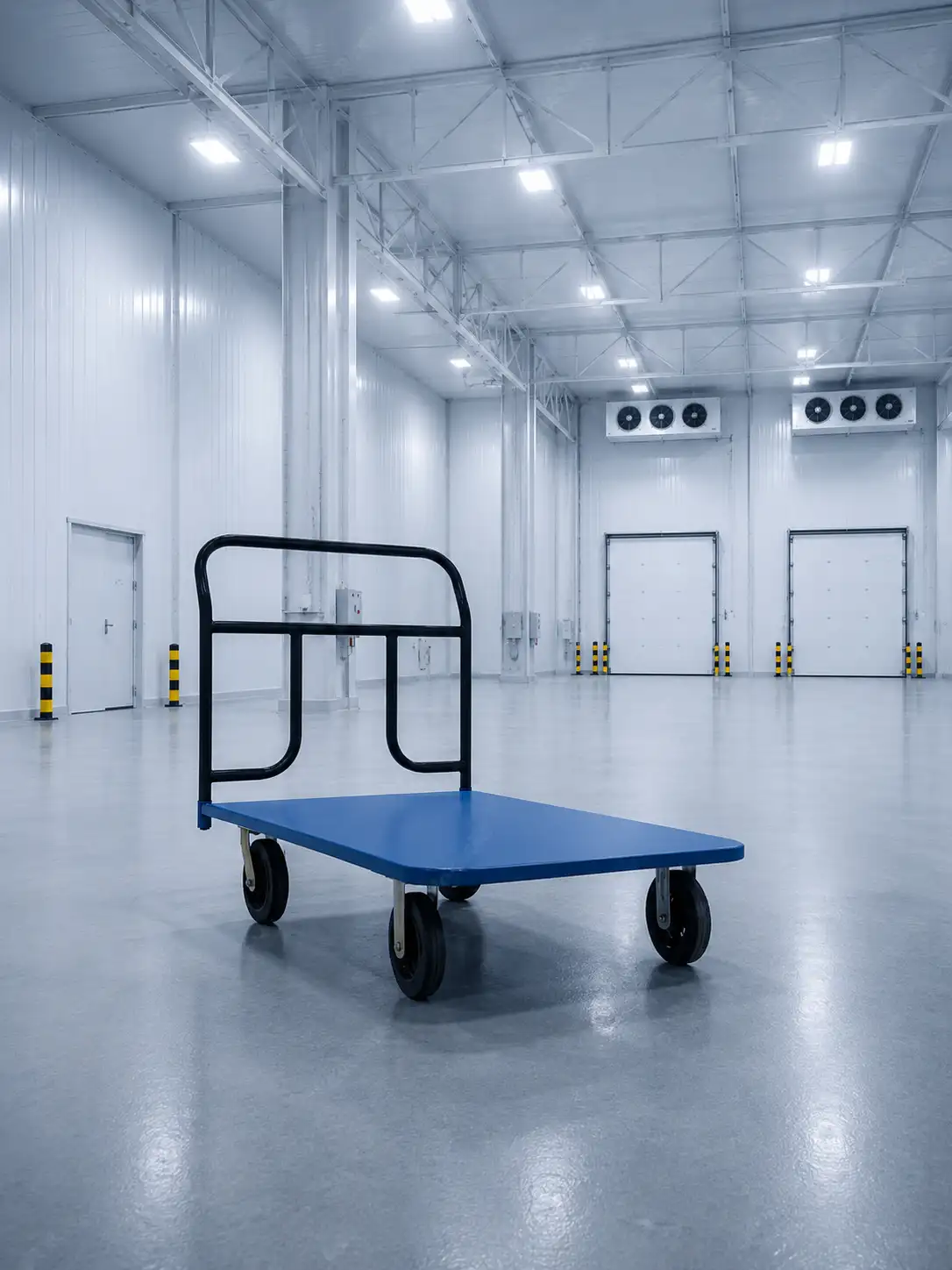
Cold storage warehouses in UAE have it rough. Blazing outdoor heat, trucks rolling in and out nonstop, and refrigeration that never gets a break. The right engineering really changes the game. It keeps the inside temperature steady even when you’re shuffling pallets around, handling back-to-back loading cycles, or just pushing through a normal busy day. Nail the insulation, sort out the airflow, balance the refrigeration properly, and design the loading bays smartly — you’ll get much more stable cooling, smoother day-to-day operations, and a cold chain that actually holds up in the UAE’s brutal climate.
Built for Long-Term Warehouse Operations
A cold storage warehouse in UAE should maintain stable cooling performance during continuous daily operations. Proper refrigeration balancing, insulation, airflow planning, and warehouse zoning help improve operational efficiency, reduce thermal loss, and support reliable long-term cold storage performance.
Commercial Cold Storage Solutions
Large Cold Storage Warehouse
Industrial-scale cold storage warehouse solutions for pallet storage, distribution inventory, and regional supply chain operations.
Walk-In Cold Storage Systems
Compact temperature-controlled storage for restaurants, catering operations, supermarkets, and food preparation facilities.
Refrigerated Warehouse Logistics
Cold chain storage designed for inventory movement, dispatch coordination, and warehouse-based distribution workflows.
Is Your Cold Chain Costing You Clients?
Businesses across the UAE lose millions each year to unreliable cold logistics. Do any of these sound familiar?
Broken Cold Chain Supply Logistics
One weak link can affect the entire system. Gaps in cold chain supply logistics mean product degradation before it ever reaches your customer.
No Reliable Frozen Storage Warehouse
Scrambling to find frozen storage warehouse space during peak season means you're paying a premium — or worse, losing the order entirely.
Cold Logistics That Don't Show Up
Unreliable cold storage logistics partners leave your temperature-sensitive cargo at risk at every handoff in the supply chain.
Compliance Nightmares
UAE food safety and pharmaceutical regulations are strict. One cold chain failure and you're facing fines, recalls, and a damaged brand.
Hidden Costs in Cold Warehouse
Fragmented cold warehousing storage with no single 3PL partner means billing surprises, no visibility, and zero leverage in negotiations.
Temperature Excursions Destroying Stock
Poor chiller room management can lead to spoilage, compliance issues, and loss of customer trust.
Leasing Cold Storage 3PL Space or Building Your Own?
Not every business needs to own a cold storage warehouse. A cold storage 3PL or logistics cold storage provider can be the right call for seasonal overflow, a short-term contract, or testing a new UAE market before committing capital. The tradeoff is recurring rent, shared facility risk, and someone else’s racking layout and monitoring standards.
Building a proprietary cold storage warehouse suits a business with steady, growing volume that wants architectural control, a dedicated compliance record, and freedom from lease terms set by someone else. Manufacturers and suppliers across Dubai, Abu Dhabi, and Sharjah increasingly make this switch once outsourced storage costs start outpacing the case for owning the facility outright.
| Consideration | Cold Storage 3PL Leasing | Proprietary Cold Storage Warehouse |
|---|---|---|
| Upfront cost | Low | Capital investment required |
| Ongoing cost | Recurring rent, shared surcharges | Predictable, no landlord markup |
| Layout and racking | Fixed by the provider | Custom-built around your product |
| Compliance ownership | Shared with other tenants | Single-tenant, dedicated record |
| Best suited to | Short-term or seasonal volume | Sustained, long-term operations |
Reliable Cold Storage Warehouse Setup
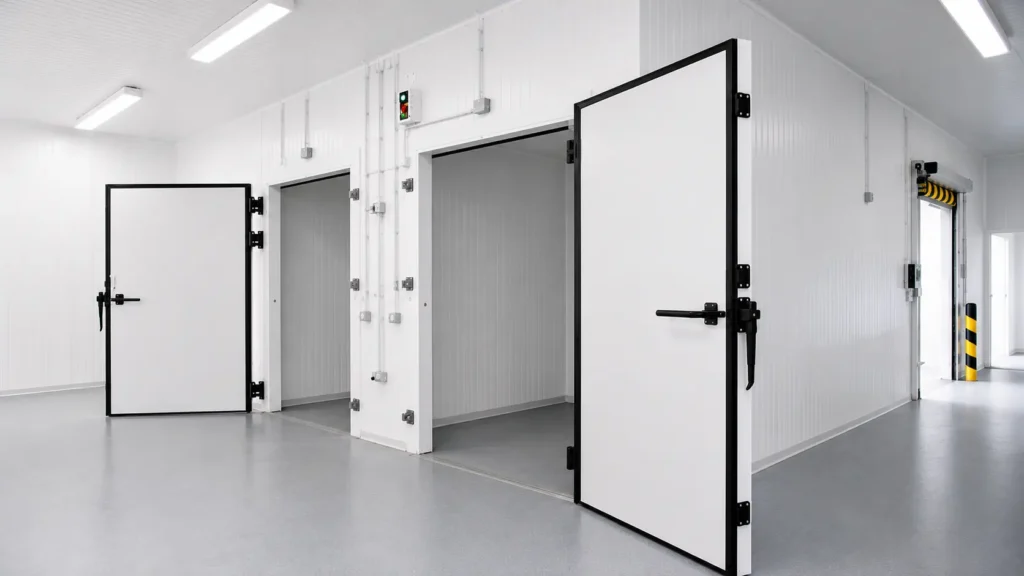
Setting up a cold storage warehouse in UAE involves more than refrigeration installation. Warehouse structure, insulated panels, loading access, storage zoning, and cooling equipment must work together as a complete operational system. As one of the best chiller room manufacturers in UAE, ChillerRoom.ae helps businesses build reliable temperature-controlled facilities designed for long-term operational performance.
Temperature Storage Categories
Different products all have their own storage sweet spots. That’s why cold storage warehouses are built with multiple temperature-controlled zones — to keep perishable inventory safe, maintain top-notch product quality, and keep the cold chain running smoothly across food, pharmaceutical, retail, and distribution businesses. You’ll usually see common setups like chilled storage, frozen storage, and industrial deep-freeze areas, each designed to match the exact operational needs of what’s being stored.
+2°C to +8°C Chilled Storage
Used for dairy products, beverages, fresh produce, pharmaceutical inventory, and food distribution operations requiring stable chilled conditions.
-30°C to -40°C Deep Freeze Storage
Specialised deep-freeze storage for blast-frozen products, high-value seafood, and industrial preservation applications requiring ultra-low temperatures.
-18°C to -25°C Frozen Storage
Suitable for frozen food products, meat storage, seafood, and commercial frozen inventory distribution.
Multi-Zone Warehouse Storage
Cold storage warehouse systems combine chilled, frozen, and controlled-temperature storage zones within a single operational facility.
Warehouse Planning & Operational Efficiency
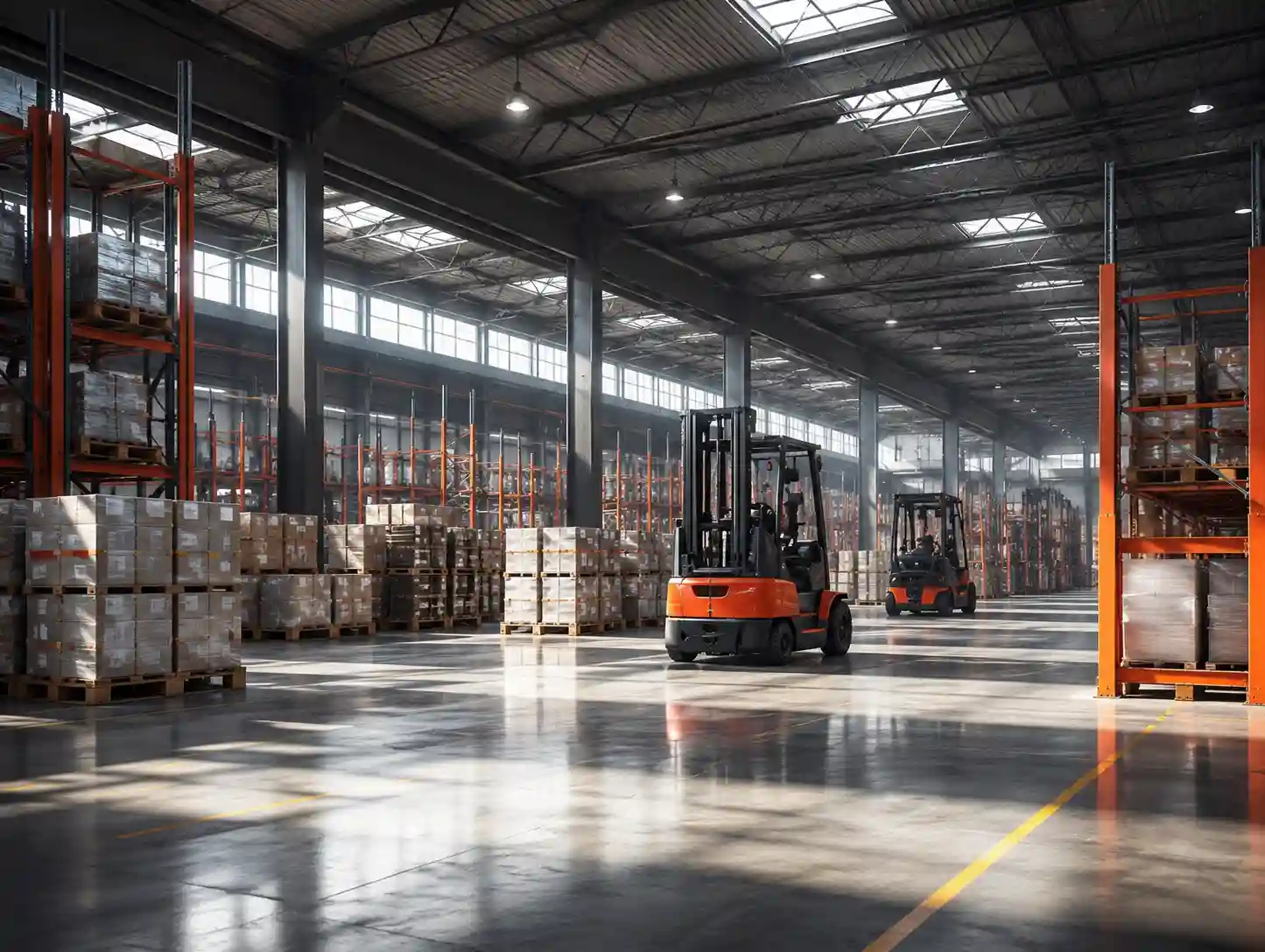
A cold storage warehouse should support operational efficiency as much as temperature control. Storage layout planning directly affects pallet movement, loading speed, inventory access, and warehouse productivity.
Important planning considerations include:
- Pallet racking configuration
- Loading dock access
- Air circulation clearance
- Storage zone separation
- Expansion flexibility
- Warehouse traffic movement
Well-planned cold storage logistics systems help reduce operational bottlenecks while improving inventory handling efficiency.
Long-Term Warehouse Performance
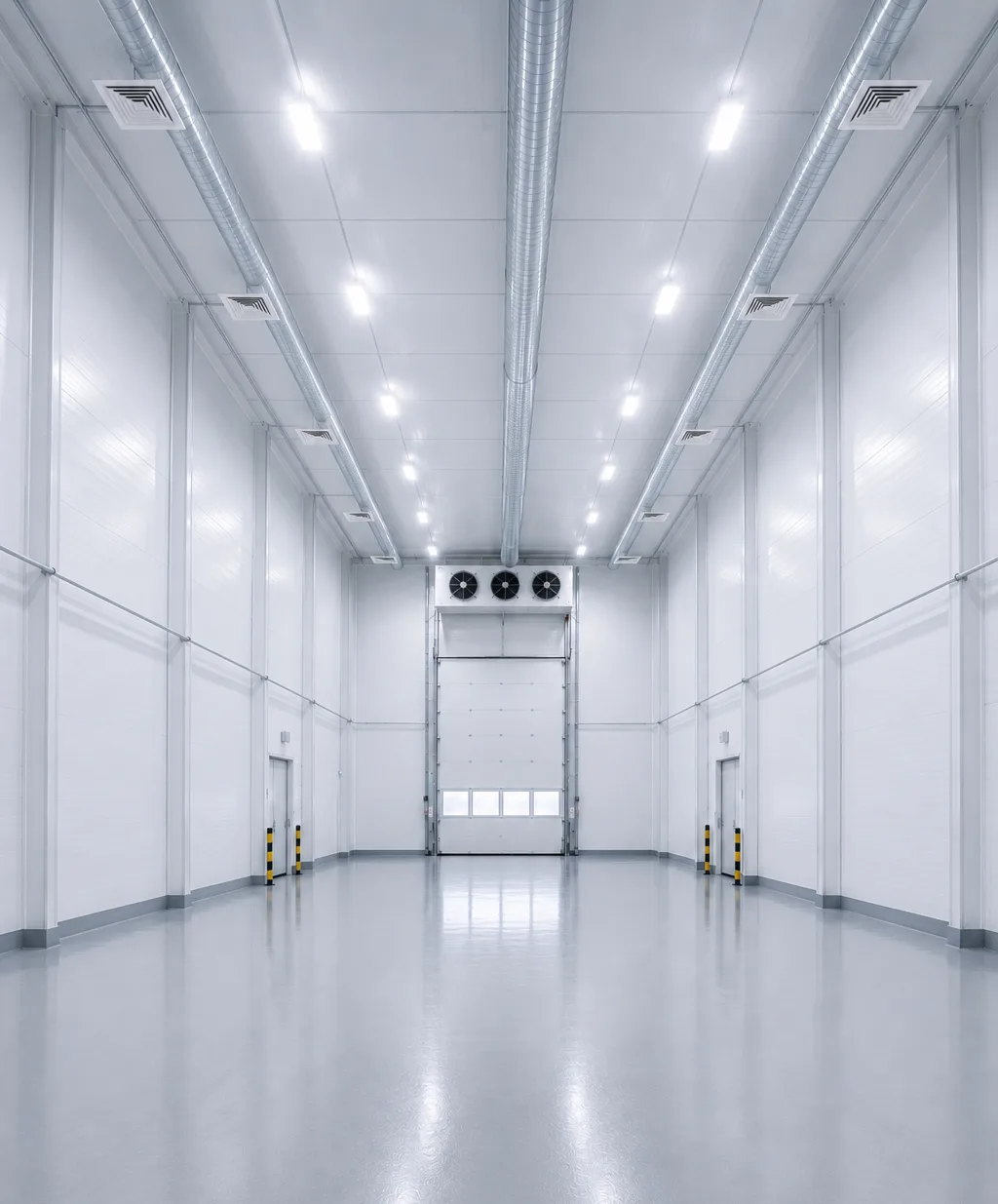
Long-term performance is critical for any refrigerated warehouse operation. Poor airflow design, insufficient insulation, or overloaded refrigeration systems can increase operational costs and reduce cooling reliability over time.
An efficient cold storage warehouse in UAE should maintain:
- Stable internal temperatures
- Consistent refrigeration performance
- Reliable inventory protection
- Efficient energy usage
- Smooth warehouse operations
Warehouse Monitoring & Temperature Control
Cold storage warehouses need rock-solid temperature stability 24/7. That steady control is what keeps perishable inventory safe and the entire cold chain running reliably. Smart monitoring systems make it all work. They continuously track refrigeration performance and warehouse conditions, then send real-time alerts across every storage zone so you can catch and fix any issue right away.
Monitoring Features:
- Temperature tracking
- Refrigeration system alerts
- Humidity monitoring
- Power backup monitoring
- Multi-zone warehouse visibility
- Operational reporting
Reliable monitoring helps improve warehouse stability, reduce operational risk, and support consistent cold storage performance in UAE operating conditions.
Compliance Built Into the Design
Cold storage warehouses in Dubai answer to the Food Code 2.0; in Abu Dhabi, ADAFSA holds facilities to the same expectation of continuous, documented temperature records. We factor that in at the site survey stage — zone monitoring, DCL-approved panels benchmarked against FM 4880, and record-keeping structured for Foodwatch — rather than treating it as paperwork to sort out after installation. Backup power and dual-sensor monitoring are specified where continuous cold chain protection is critical, scaled to your product and risk profile rather than applied as a fixed spec.
Frequently Asked Questions
Starting a cold storage warehouse in UAE requires a suitable industrial location, insulated storage areas, refrigeration systems, power backup, and warehouse loading access. Facilities are commonly planned near logistics hubs and distribution routes.
A cold storage warehouse in UAE is a temperature-controlled facility designed to store perishable and temperature-sensitive products under stable chilled, frozen, or deep-freeze conditions. These warehouses are commonly used for food storage, pharmaceutical inventory, retail distribution, and cold chain logistics operations across Dubai, Abu Dhabi, and Sharjah.
Most cold storage warehouses include multiple storage zones such as:
- Chilled storage (+2°C to +8°C)
- Frozen storage (-18°C to -25°C)
- Deep-freeze storage (-30°C and below)
- Multi-temperature warehouse systems
Modern warehouse facilities also use insulation systems, refrigeration equipment, loading bay planning, and real-time monitoring systems to maintain stable operating conditions and reduce product spoilage.
The three main types of warehousing are public warehousing, private warehousing, and contract (3PL) warehousing. Public warehouses offer shared storage space, private warehouses are operated by a single business, and 3PL warehouses provide outsourced storage and logistics services.
The cold storage industry includes temperature-controlled warehouses used for storing food products, frozen goods, pharmaceutical products, and other perishable inventory under regulated storage conditions.
A cold storage warehouse uses refrigeration systems to maintain stable temperatures for chilled, frozen, and deep-freeze storage. Products are stored in controlled zones designed to protect inventory quality during storage and distribution.
Leasing gives you immediate space with variable, recurring costs — useful for short-term overflow or early market entry. Building a proprietary facility requires upfront capital but removes rental increases, gives you full control over racking and layout, and puts compliance in your own hands rather than a shared tenant’s.
These are available as customised options rather than standard inclusions. During the site assessment, we review your product risk, regulatory requirements, and operational continuity needs, then specify monitoring and redundancy accordingly — a pharmaceutical cold room and a produce distribution warehouse, for instance, typically call for very different levels of redundancy.
They do. Any panel used in a warehouse-scale build needs sign-off from the Dubai Central Laboratory. On top of that, many projects also spec their panels against FM 4880, an internationally recognised benchmark that tests flame spread and whether the material self-extinguishes.
Five degrees Celsius is the line Dubai Municipality draws for high-risk perishable foods under the Food Code 2.0. Cross above it and the storage isn’t compliant. Frozen product needs to run colder still, -18°C or under, while deep-freeze and blast-chill work pushes down to -30°C through -40°C. The number that actually applies depends on what’s in the room, so check the current Food Code against the specific product before finalising a spec.
Planning a Cold Storage Warehouse in UAE?
Discuss your storage capacity, operational workflow, and temperature requirements with our team. We help businesses plan practical cold storage warehouse solutions designed for UAE operating conditions.