
Fish Cold Storage Manufacturers in UAE
Fish spoils within hours of leaving the water, and UAE ambient heat gives refrigeration equipment almost no room for error. ChillerRoom.ae engineers fish cold storage and seafood freezer rooms built around your species mix — for Dubai, Abu Dhabi, and Sharjah.
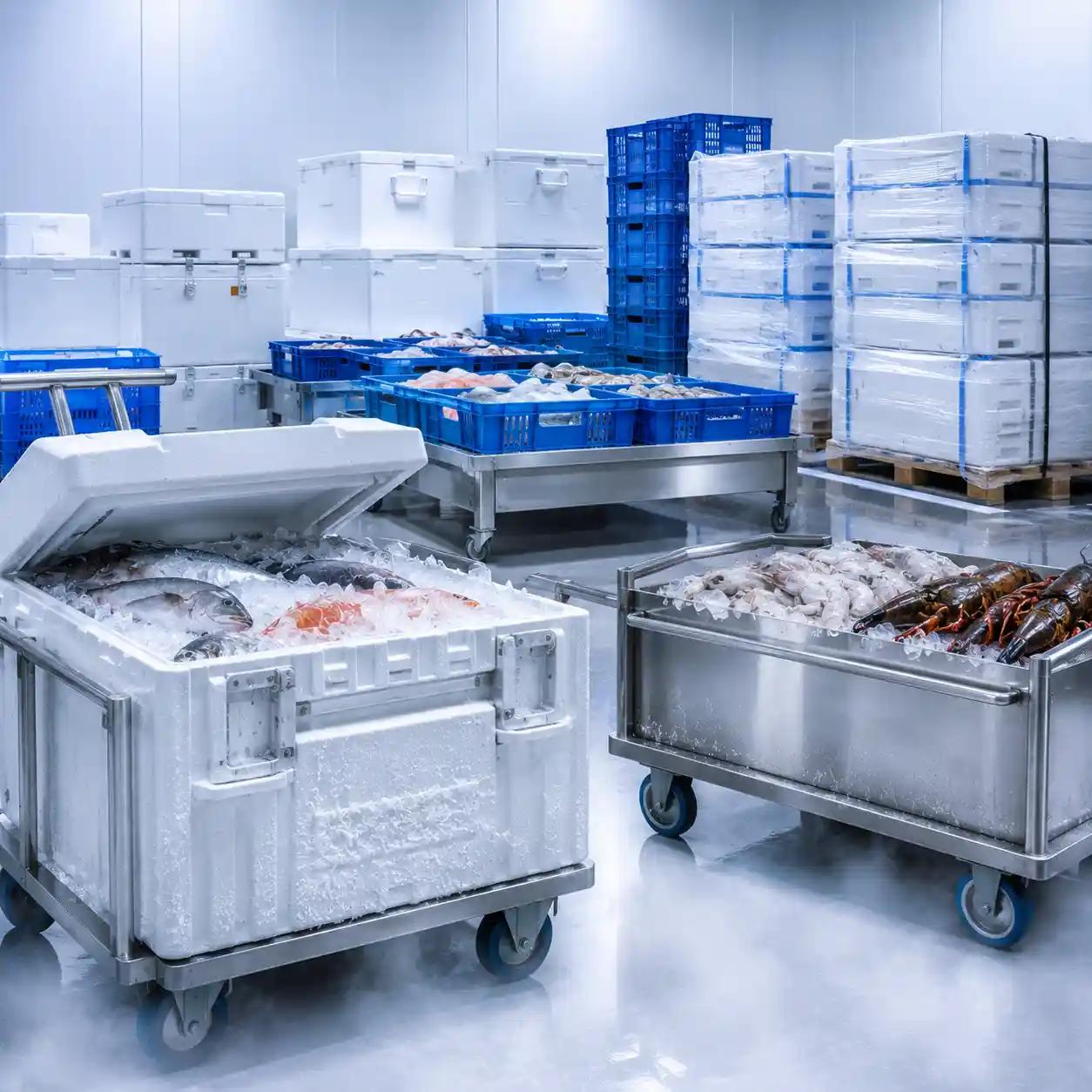
Standard Refrigeration Isn't Built for Seafood
Fish is one of the least forgiving products a cold room can hold. High moisture and enzymes that begin breaking down tissue the moment a fish dies mean a few degrees of drift does real damage. Left too warm, pelagic species like tuna and mackerel convert bacteria into histamine — a toxin that survives cooking. Get humidity wrong and fresh fish either dries out or sits in bacteria-breeding meltwater.
A cold room designed generically — for produce, without ice-water drainage — fails seafood in ways that aren’t obvious until stock is already compromised. ChillerRoom.ae designs specifically around this gap:
- Rapid pulldown for fresh catch
- Drainage built for ice meltwater
- Species zoned by storage type
- Refrigeration sized for UAE heat
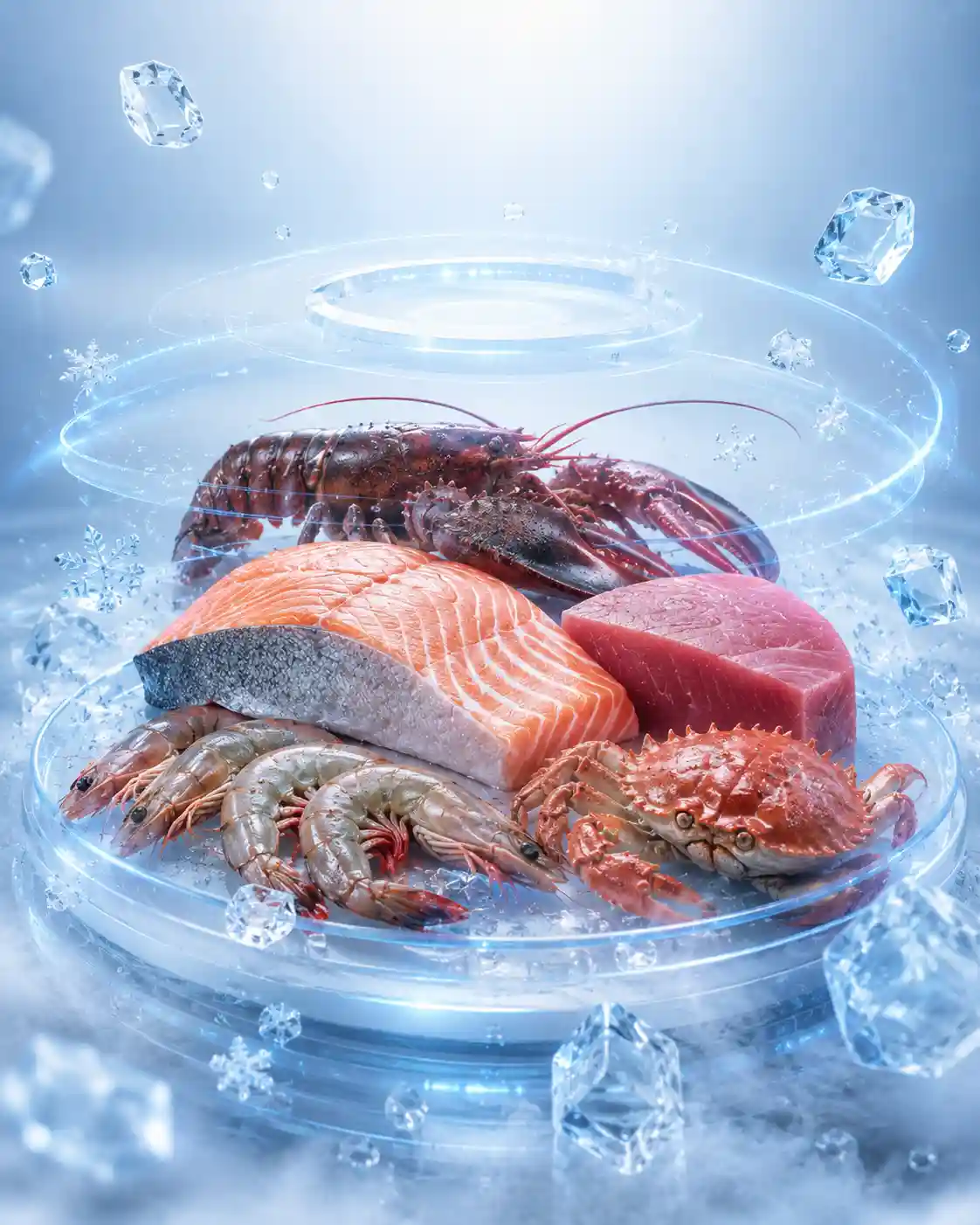
Custom Cold Room or Standalone Fish Freezer?
Comparing a fish freezer, cooler, or chiller against a custom cold room? The distinction matters more than the price tag. Standalone units are plug-and-play appliances suited to a single counter or small kitchen — not built for bulk inventory or the temperature stability wholesale operations need. A custom fish cold room is sized to your actual volume and built to hold setpoint through heavy traffic and turnover. If your operation runs on volume rather than a single display counter, a walk-in solution is almost always right — the first thing we’ll help you confirm.
Built to Pass Every Inspection, Not Just the First One
A cold room that drifts out of spec quietly — a failing coil, a worn door seal — is a food safety risk before it’s ever a visible failure. We design in digital monitoring and alarms that support HACCP documentation and the food safety code that applies in your emirate, from day one. Every installation starts with a site assessment, moves through load calculation and installation, and ends with commissioning that verifies temperature and humidity hold under real conditions — not just on a spec sheet.
Which Fish Cold Room Fits Your Operation?
Different seafood businesses need different builds — the right setup depends on your volume, species mix, and how far the cold chain has to travel after storage.
Restaurants & Fishmongers
Compact, modular chillers and freezers sized for kitchen or shopfront space, built to hold temperature through service-hour door traffic.
Wholesalers & Processors
Multi-zone rooms handling chilled and frozen inventory side by side, plus blast-freezing capacity to bring fresh catch down to core temperature fast.
Distributors & Exporters
High-value freezer inventory with backup redundancy and digital tracking, built for shipments moving through multiple hands before they reach the end buyer.
Built for Dubai, Abu Dhabi & Sharjah's Seafood Supply Chain
Dubai is a major seafood logistics hub, with shipments moving through Jebel Ali Port and Dubai International Airport into distribution. Raw seafood must be kept physically separate from cooked or ready-to-eat product under the Dubai Municipality Food Code. Abu Dhabi falls under ADAFSA’s separate requirements instead. Whichever emirate you’re in, we build to the compliance framework that actually applies to your site — confirmed at assessment, not assumed.
Fish & Seafood Cold Storage Temperature Guide
| Species | Storage State | Temperature | Key Consideration |
|---|---|---|---|
| Fresh Fish (general) | Chilled | 0°C to +2°C | Held near ice temperature to slow bacterial growth without freezing flesh |
| Shrimp | Chilled / Frozen | 0°C to +4°C / -18°C to -20°C | Prone to melanosis (black spot); typically blast-frozen post-harvest |
| Cod & Lean White Fish | Frozen | -18°C to -25°C | Requires stable temperature to avoid protein denaturation |
| Tuna (sashimi-grade) | Ultra-Low Frozen | -40°C to -60°C | Prevents myoglobin oxidation that dulls flesh colour |
| Salmon | Chilled / Frozen | 0°C / -20°C to -25°C | High fat content is susceptible to rancidity; often vacuum-packed |
| Lobster & Crab Meat | Frozen | -18°C or colder | Enzymes degrade meat quickly once processed; needs rapid blast-freezing |
| Mussels & Oysters (live) | Chilled — never frozen | +4°C to +8°C | Must stay dormant but alive; freezing or fresh water submersion kills them |
Note: These figures are our starting engineering baseline. If your operation stores several species together, room design defaults to the strictest requirement among them – confirmed during your site assessment, not guessed from a table.
Grouped by How Each Species Actually Spoils
Seafood splits into risk categories based on fat content, enzyme activity, and whether the animal needs to stay alive — not just species name. Store the wrong category at the wrong setpoint, and the failure shows up as a rubbery texture, dulled colour, or dead stock that no amount of chilling can reverse afterward. For exact temperature and humidity figures, see the storage guide above.
Fatty & Oily Fish
Salmon, mackerel, sardines. Don't let these sit in the same rotation cycle as lean fish — turnover needs to be faster, and older stock should move first.
Ultra-Low Tuna
Sashimi-grade tuna. If it's destined for sashimi, it needs its own zone — mixing it into a standard -18°C freezer downgrades it to processed-grade stock.
Live Bivalves
Mussels, oysters. Store in shallow trays, not submerged — standing water suffocates them as fast as the wrong temperature does.
Crustaceans
Shrimp, lobster, crab meat. The clock starts the moment processing stops — blast-freezing needs to be built into the workflow, not treated as a later step.
Lean White Fish
Cod, haddock, snapper. The risk here isn't the setpoint — it's stability. A room that swings even briefly does more damage to these than one that's simply colder.
Fresh Iced Fish
Daily-catch whole fish held on ice. Spoils fastest of every category here — needs continuous drainage and near-ice temperature, with a working shelf life measured in days, not weeks.
Four Ways We Engineer for UAE Heat
Getting the temperature setpoint right is only part of it. A cold room built without these four factors in mind won’t hold that setpoint once summer arrives.
Desert-Rated Refrigeration
Compressors and condensers sized for sustained 45°C+ ambient heat, not equipment de-rated for milder climates that trips and short-cycles by midsummer.
Corrosion-Resistant Interiors
Food-safe stainless steel or coated galvanised surfaces built to withstand saline seafood environments and constant washdown.
PIR B1 Fire-Rated Panels
High-density insulation that meets UAE Civil Defence fire codes while minimising heat transfer through the room's walls.
Infiltration Control at Every Door
Strip curtains and wide-fin evaporators manage the hot, humid air that floods in during frequent loading — before it turns to ice on the coil.
Where Cold Room Design Fits Your Seafood Cold Chain
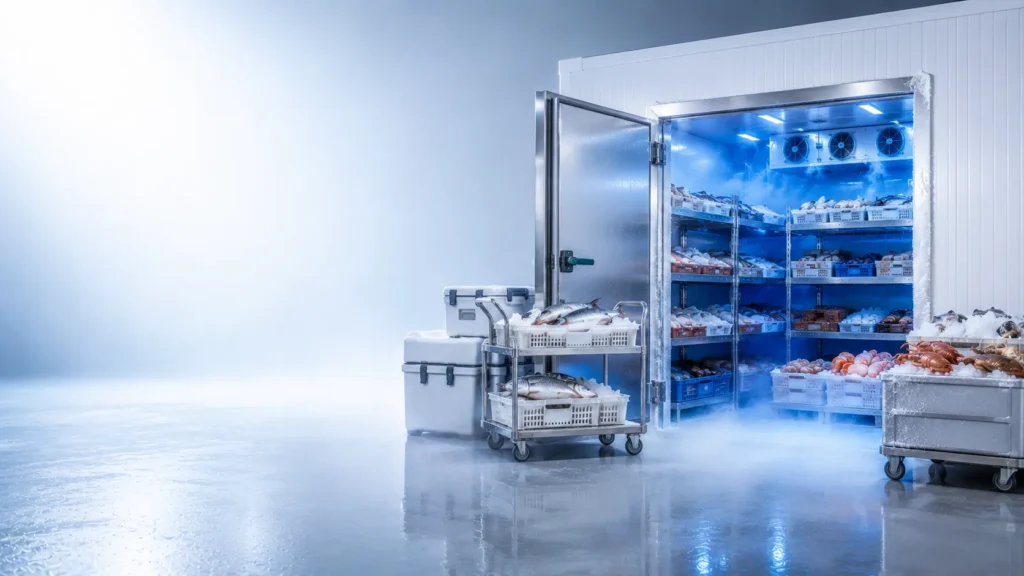
Seafood spoilage risk doesn’t spread evenly across the supply chain — it concentrates at specific handoffs: the delay between catch and first chilling, temperature instability inside storage itself, and the gap between storage and loading for dispatch. A cold room can’t fix delays before product reaches your dock, but it can remove storage and dispatch as failure points — holding setpoint through receiving, cutting the time product spends at ambient temperature during loading, and keeping the room stable enough that a documented HACCP check actually reflects reality. That’s the part of the chain we’re responsible for engineering correctly.
Frequently Asked Questions
Yes — we design, manufacture, and install fish cold rooms and seafood freezer rooms across all three emirates.
Your species mix, approximate storage volume, whether you need chilled, frozen, or both, and your site location. This lets us scope the right refrigeration load before a site visit.
It depends on the room. Existing insulation and refrigeration capacity can sometimes be adapted, but drainage, humidity control, and species zoning often need purpose-built changes — we assess this on-site rather than guessing from a floor plan.
Both. We build compact, modular chillers for single kitchens and shopfronts as well as multi-zone wholesale and processing rooms.
A new build is engineered around your exact species mix, volume, and UAE ambient conditions. A used unit may carry unknown wear on seals, coils, or insulation that only shows up once it’s holding live stock — we can advise once we know your budget and timeline.
Fresh fish rooms need floor drainage engineered for continuous meltwater removal so fish never sit in standing liquid. Freezer rooms, by contrast, generally avoid floor drains due to icing risk — the two require different floor designs.
Yes, with zoning. A shared room defaults to the strictest temperature requirement among the species stored, and aromatic species are sealed to prevent cross-flavouring — this is worked out during your assessment.
Timelines depend on room size and site readiness. We’ll give you a firm schedule once load calculation and site assessment are complete.
Need Fish Cold Storage in UAE?
Tell us your species mix, storage volume, and site location. ChillerRoom.ae will design, manufacture, and install a fish cold room matched to your operation — from compact kitchen chillers to multi-zone wholesale freezer rooms — across Dubai, Abu Dhabi, and Sharjah.