Chiller Room & Freezer Room: Complete Cold Storage Guide for UAE Businesses – 2026
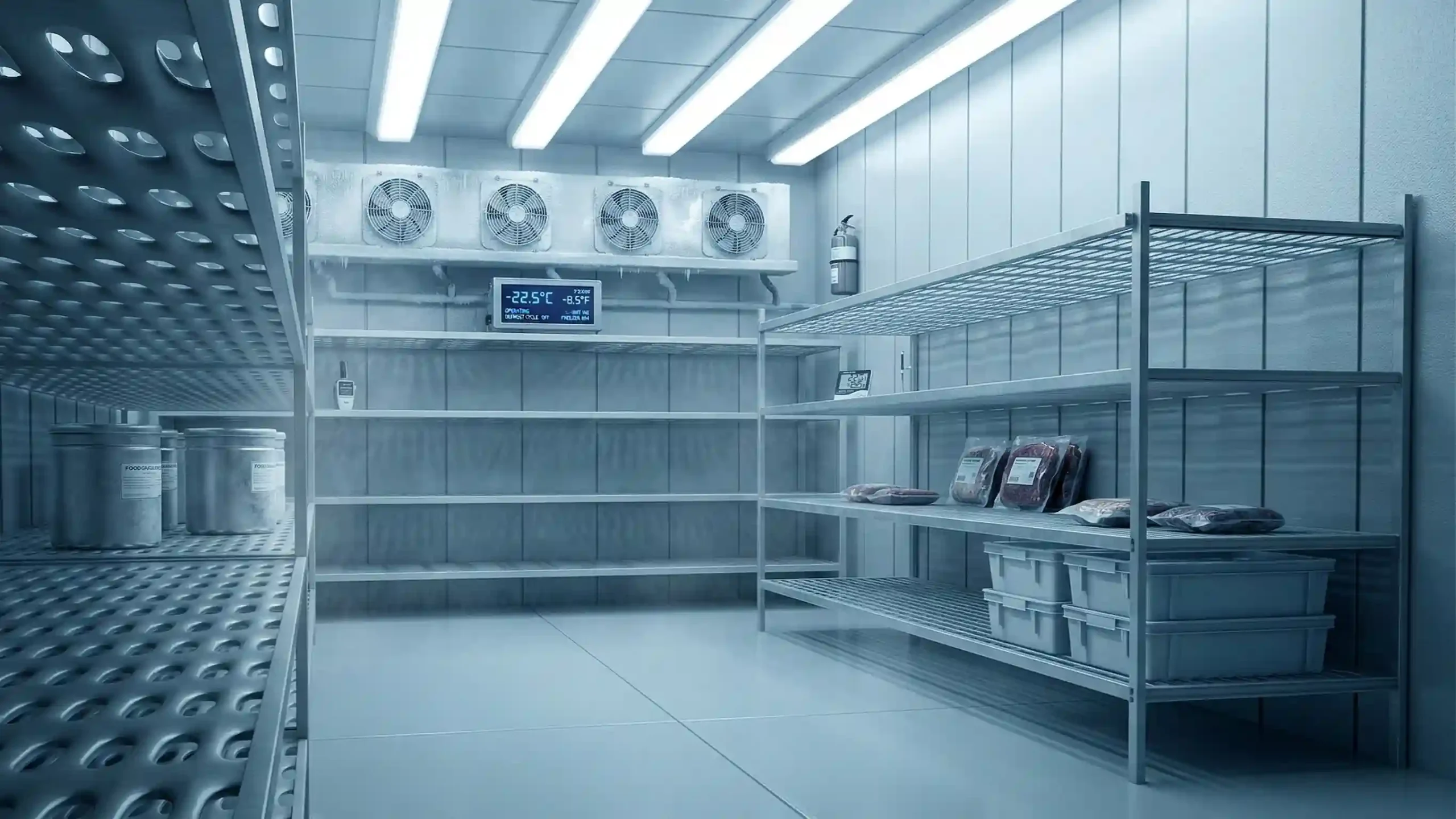
Table of Contents
Introduction
Cold storage infrastructure is essential for businesses operating in Dubai’s extreme climate. Restaurants, supermarkets, seafood exporters, pharmaceutical distributors, and logistics warehouses all rely on controlled temperature environments to protect perishable inventory and maintain product safety.
With outdoor temperatures frequently exceeding 45°C, with extreme peaks recorded in inland areas, refrigeration systems must work harder to maintain stable internal temperatures. Poorly designed systems can lead to product spoilage, cold chain failures, and major financial losses.
This is why businesses depend on reliable chiller room manufacturers in UAE to design and install commercial cold storage systems that can perform consistently in harsh desert environments.
At chillerroom.ae, we are one of the best chiller room manufacturers in Dubai, UAE, supplying both new and used chiller rooms for restaurants, supermarkets, food distributors, pharmaceutical companies, and logistics facilities across the UAE.
Our systems are designed to maintain stable temperatures, optimize energy efficiency, and comply with Dubai food safety regulations.
What is a Chiller Room?
A chiller room in UAE is a commercial cold storage facility designed to maintain temperatures typically between 0°C and 8°C, with most food applications requiring tighter control within 0°C to 5°C.
These rooms are widely used to store fresh food, dairy products, beverages, vegetables, and pharmaceutical products that require refrigeration but should not be frozen.
The primary purpose of a chiller room is to maintain a stable environment that slows bacterial growth while preserving product freshness.
Maintaining temperatures below 5°C is critical for preventing food from entering the bacterial growth danger zone defined in food safety regulations.
Reliable Chiller Room Manufacturers in Dubai ensure that refrigeration equipment, insulation panels, and airflow systems are properly engineered to maintain stable cooling performance even during peak summer temperatures.
What is a Freezer Room?
A freezer room in UAE is designed for deep freezing and long-term storage of products.
Unlike a chiller room, which focuses on refrigeration, freezer rooms maintain temperatures at -18°C or below, with deep freeze applications reaching -30°C or lower depending on product requirements.
These rooms are typically used for storing:
- seafood and fish
- frozen meat and poultry
- frozen vegetables
- frozen desserts
- frozen ready-to-eat food products
Freezer rooms require stronger refrigeration systems and thicker insulation panels because they must maintain sub-zero temperatures continuously. Professional cold room manufacturers design freezer rooms with specialized refrigeration components that prevent heat infiltration and maintain energy efficiency.
Chiller Room vs Freezer Room: Key Differences
Many businesses confuse chiller rooms and freezer rooms, but they serve completely different cold storage purposes.
| Feature | Chiller Room | Freezer Room |
|---|---|---|
| Temperature Range | 0°C to 8°C (food applications typically 0°C to 5°C) | -18°C or below (deep freeze to -30°C or lower) |
| Purpose | Short-term refrigeration | Long-term freezing |
| Products Stored | Vegetables, dairy, beverages | Meat, seafood, frozen foods |
| Energy Consumption | Moderate | High |
| Insulation Thickness | 80–100 mm panels | 120–150 mm panels |
For example:
- Restaurants typically require chiller rooms for daily ingredient storage.
- Seafood exporters and meat distributors require freezer rooms for long-term preservation.
Understanding the difference helps businesses choose the right cold storage solution when working with chiller room manufacturers.
How Commercial Chiller Rooms Work
A commercial cold room operates using a vapor-compression refrigeration cycle, which removes heat from the storage environment.
The refrigeration cycle includes four main stages:
Compressor
The compressor compresses refrigerant gas and increases its pressure and temperature.
Condenser
The hot refrigerant releases heat through the condenser coils, transferring heat to the outside environment.
Expansion Valve
The refrigerant passes through an expansion valve, which reduces pressure and temperature.
Evaporator
Inside the cold room, evaporator coils absorb heat from the air, cooling the storage environment.
This continuous cycle maintains stable cold storage temperatures required for commercial operations.
Key Components of a Commercial Chiller Room
Professional chiller room manufacturers in UAE design cold rooms using several critical refrigeration components.
Refrigeration Compressors
The compressor is the heart of the refrigeration system and circulates refrigerant through the system.
Modern systems use energy-efficient compressors — scroll compressors for smaller commercial units, and screw or reciprocating compressors for larger cold storage facilities
Evaporators
Evaporator coils absorb heat from the cold room air and maintain the required temperature.
Fans circulate cold air evenly throughout the storage area.
Condensing Units
Condensing units release the heat absorbed inside the cold room to the outside environment.
Because Dubai experiences extreme temperatures, chiller room manufacturers in Dubai carefully size condensing units to ensure efficient heat rejection.
High outdoor temperatures reduce condenser efficiency and force compressors to work harder.
Insulated Sandwich Panels
Cold rooms are constructed using PUF (Polyurethane Foam) or PIR (Polyisocyanurate) insulated panels. PIR panels offer better thermal performance and fire resistance and are increasingly preferred for commercial cold rooms, while PUF panels remain common in standard applications
Typical insulation thickness ranges from 80 mm to 150 mm, depending on the application — chiller rooms generally use 80–100 mm panels, while freezer rooms require 120–150 mm panels.
Temperature Controllers
Digital controllers monitor and regulate internal temperatures to maintain consistent refrigeration.
Advanced systems include alarms and automated monitoring features.
Humidity Control Systems
Humidity control prevents moisture buildup and ice formation on evaporator coils. It also directly affects product quality — low humidity causes dehydration and weight loss, while high humidity leads to condensation and mold growth. Proper humidity management is essential for fresh produce, flowers, meat, and dairy storage.
Cold Room Doors
Cold room doors are heavily insulated and designed with airtight seals to prevent warm air infiltration.
Industries That Need Chiller Rooms in Dubai
Commercial cold storage is essential for several industries across Dubai.
Professional chiller room suppliers in UAE supply refrigeration systems for:
Restaurants and Commercial Kitchens
Restaurants require chiller rooms for storing fresh ingredients and beverages.
Supermarkets
Supermarkets store bulk inventory in walk-in cold rooms before transferring items to display refrigerators.
Seafood Exporters
Seafood exporters require freezer rooms to maintain ultra-low temperatures during storage and transportation.
Pharmaceutical Companies
Pharmaceutical cold storage protects medicines, vaccines, and laboratory products.
Catering Companies
Large catering businesses rely on chiller rooms for ingredient storage.
Logistics Warehouses
Cold storage warehouses are essential for temperature-controlled distribution.
Cost of Installing a Chiller Room in Dubai
Cold storage construction costs vary depending on room size, refrigeration capacity, and insulation materials.
Typical installation costs in Dubai include:
- Small commercial chiller room: AED 50,000 – AED 120,000
- Medium cold storage room: AED 150,000 – AED 350,000
- Large warehouse cold storage: AED 500,000+
Construction costs also depend on the refrigeration system, insulation thickness, monitoring systems, and energy efficiency requirements.
Working with experienced chiller room manufacturers ensures that businesses receive the correct refrigeration capacity and system design.
Note: Costs vary based on current material and refrigerant pricing. Energy running costs should also be factored into total investment planning.
Why Businesses Choose a Professional Chiller Room Manufacturer in UAE
Commercial refrigeration systems require precise engineering and professional installation.
Businesses choose experienced chiller room manufacturers in UAE for several reasons.
Energy Efficiency
Modern refrigeration systems reduce energy consumption.
Temperature Stability
Professional systems maintain stable temperatures even during Dubai summers.
HACCP Compliance
Cold storage systems must comply with ESMA (Emirates Authority for Standardization and Metrology), municipality food safety regulations (Dubai, Abu Dhabi, Sharjah, and other emirate authorities), and HACCP-based food safety systems.
Long-Term Durability
High-quality refrigeration equipment ensures a long operational life.
How to Choose the Best Chiller Room Manufacturers in UAE
Businesses should evaluate several factors when selecting chiller room manufacturers & suppliers in UAE.
Installation Experience
Choose suppliers with proven experience installing commercial cold rooms.
Refrigeration Technology
Advanced refrigeration systems improve efficiency.
After-Sales Support
Reliable manufacturers provide maintenance and technical support.
Energy-Efficient Design
Energy-efficient systems reduce operating costs.
Customization Capability
Different industries require different cold storage designs.
Why Businesses Choose Chillerroom.ae
We are a trusted Chiller Room Manufacturer & Service Provider in UAE, delivering commercial cold storage solutions for businesses across Dubai.
Related Cold Storage Guides:
Pharma Cold Storage Medical Chillers
Frequently Asked Questions (FAQs)
Most commercial chiller rooms maintain temperatures between 0°C and 8°C. Food safety applications typically require tighter control within 0°C to 5°C, while pharmaceutical storage commonly uses the 2°C to 8°C range.
The cost of a commercial chiller room depends on size, refrigeration capacity, insulation materials, and installation complexity. Small systems may cost tens of thousands of dirhams, while large cold storage facilities require significantly higher investment.
A chiller room maintains temperatures between 0°C and 8°C for refrigeration of perishable goods, while a freezer room operates at -18°C or below for long-term frozen storage. They differ in three key ways: insulation thickness (chiller rooms use 80–100mm panels, freezer rooms require 120–150mm), refrigeration capacity (freezer rooms demand significantly more powerful systems), and energy consumption (freezer rooms consume considerably more energy to maintain sub-zero temperatures continuously).
Seafood must be stored at very low temperatures to prevent bacterial growth. Fresh seafood typically requires -1°C to 1°C, while frozen seafood requires -18°C or below. Live seafood and shellfish have additional requirements, including species-specific temperatures and oxygenation systems
Chiller rooms in UAE must comply with ESMA (Emirates Authority for Standardization and Metrology), municipality food safety regulations across Dubai, Abu Dhabi, Sharjah, and other emirates, and HACCP-based food safety systems. Compliance requires temperature monitoring, data logging, and regular sensor calibration — not just installation.
Yes. Humidity control is as important as temperature. Low humidity causes product dehydration and weight loss, while high humidity leads to condensation and mold growth. Different products require different humidity levels — fresh vegetables need 90–95% RH, dairy requires 75–85% RH, and fresh meat requires 85–90% RH.
PUF (Polyurethane Foam) and PIR (Polyisocyanurate) are both used in cold room construction. PIR panels offer better thermal performance and fire resistance and are increasingly preferred for commercial applications. PUF panels remain common in standard installations. The right choice depends on application requirements and local fire safety regulations.