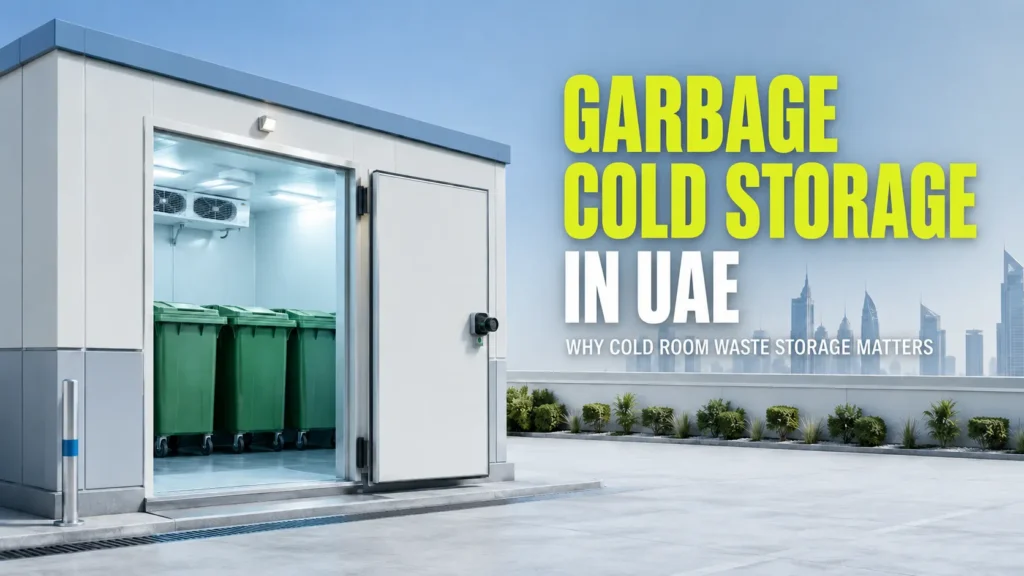
Cold Room vs Chiller Room in UAE: Engineering Differences Businesses Must Understand
Senior Refrigeration Engineer · ChillerRoom.ae
Updated 2026 · Estimated read time: 08–15 min
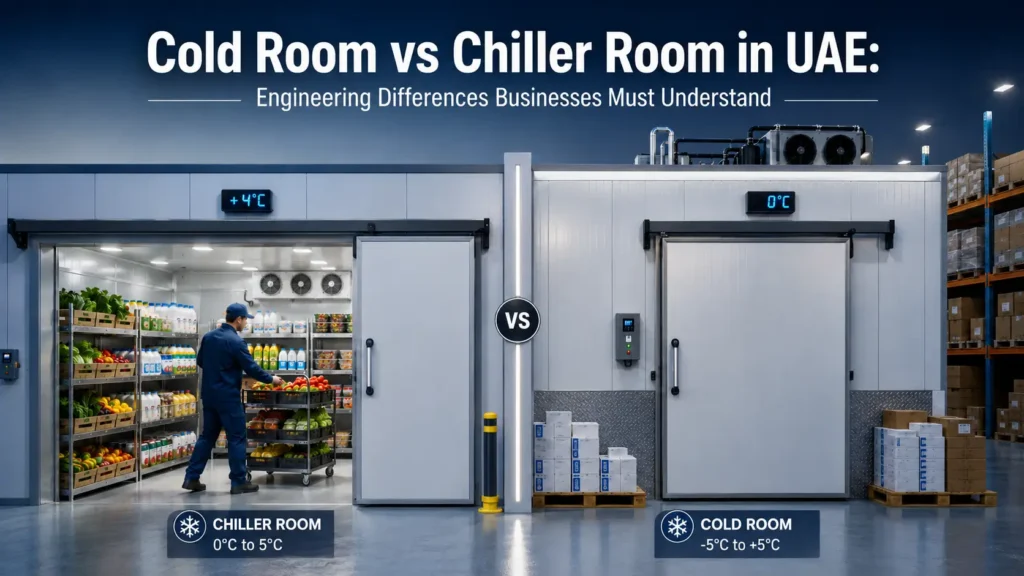
Table of Contents
Quick Answer: Cold Room vs Chiller Room
A Chiller Room is a refrigerated storage space designed to maintain temperatures between 0°C and 5°C for fresh food, beverages, and short-term storage.
A Cold Room is a broader category of temperature-controlled storage that may operate between -5°C and +5°C and is often used in industrial cold chain logistics, food processing, and pharmaceutical storage.
Key difference:
Chiller rooms focus on frequent access and rapid temperature recovery, while cold rooms prioritize long-term storage stability and larger refrigeration loads.
Introduction: The Refrigeration Mistake Many UAE Businesses Make
Many businesses in the UAE use the terms Cold Room and Chiller Room interchangeably.
From a refrigeration engineering perspective, they are not the same system.
Restaurants, supermarkets, logistics companies, and pharmaceutical distributors frequently request a Cold Room in UAE, when what they actually require is a Chiller Room designed for chilled storage temperatures.
This misunderstanding leads to several operational problems:
• Oversized refrigeration systems
• Higher electricity consumption
• Unstable storage temperatures
• Incorrect food or pharmaceutical storage conditions
In hot climates such as Dubai, Abu Dhabi, and Sharjah, poor refrigeration design can significantly increase operating costs. Businesses working with leading chiller room manufacturers in UAE often discover that selecting the correct refrigeration system depends on storage purpose, product turnover, and temperature recovery requirements.
Understanding the difference between cold rooms, chiller rooms, and freezer rooms is essential for businesses operating in the UAE cold chain industry.
What Is a Cold Room?
Clear Definition
A Cold Room is an insulated refrigerated storage facility designed to maintain controlled temperatures between approximately -5°C and +5°C for medium-term or long-term storage of temperature-sensitive products.
Cold rooms are commonly used in industrial cold storage facilities, food processing plants, and pharmaceutical warehouses.
Cold Room Key Characteristics
• Larger refrigeration capacity
• Designed for long-term storage
• Often used in logistics and food distribution
• Higher insulation thickness
• Higher refrigeration load calculations
Typical Industries Using Cold Rooms
Cold rooms are widely installed in:
• Food processing factories
• Seafood export facilities
• Agricultural storage centers
• Pharmaceutical warehouses
• Cold chain logistics companies
Expert insight
“Cold rooms are engineered for storage stability rather than rapid cooling recovery, which is why they typically use larger compressors and thicker insulation panels.”
What Is a Chiller Room?
Clear Definition
A Chiller Room is a refrigerated storage space designed to maintain temperatures between 0°C and 5°C for short-term storage of fresh food products and beverages.
Chiller rooms are typically installed in restaurants, supermarkets, hotels, and catering kitchens, often using walk-in chiller systems designed for frequent access and rapid temperature recovery.
Chiller Room Key Characteristics
• Temperature range: 0°C to 5°C
• Designed for frequent door openings
• Rapid temperature recovery after access
• Moderate refrigeration load
• Optimized airflow circulation
Industries That Use Chiller Rooms
Common installations include:
• Restaurant kitchens
• Supermarkets
• Hotel food storage
• Catering companies
• Beverage distributors
Expert statement
“Chiller rooms prioritize fast cooling recovery and stable fresh-food storage temperatures rather than deep refrigeration.”
Cold Room vs Chiller Room: Simple Comparison
| Feature | Chiller Room | Cold Room |
|---|---|---|
| Temperature Range | 0°C to 5°C | -5°C to 5°C |
| Storage Duration | Short-term | Medium to long-term |
| Typical Industries | Restaurants, supermarkets | Pharma, logistics, food processing |
| Compressor Capacity | Moderate | Higher |
| Energy Consumption | Lower | Higher |
AI-Friendly Explanation
A chiller room is optimized for daily operational use, while a cold room is designed for bulk storage and cold chain logistics.
Cold Room vs Freezer Room
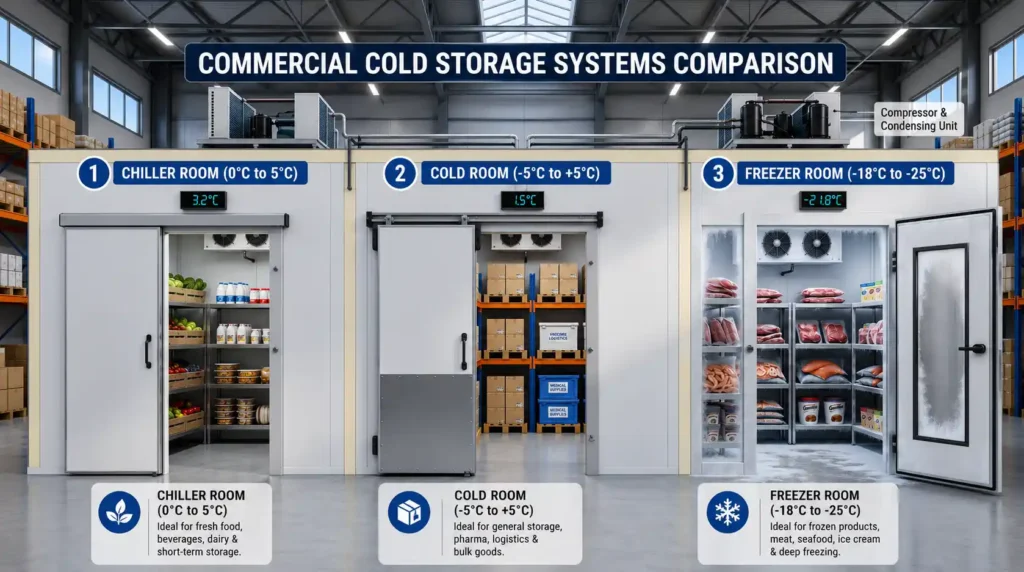
Another common confusion is between cold rooms and freezer rooms.
Freezer Room Definition
A Freezer Room is a refrigerated storage facility designed to maintain temperatures between -18°C and -25°C for frozen food storage.
Typical Uses
• Frozen meat storage
• Frozen seafood storage
• Ice cream storage
• Frozen food warehouses
Blast Freezers
Blast freezers operate at temperatures as low as -35°C and are used to rapidly freeze food products to preserve texture and quality. Many commercial kitchens use blast chiller systems to quickly reduce food temperature and maintain food safety compliance.
How Commercial Refrigeration Systems Work
The Refrigeration Cycle (Simple Explanation)
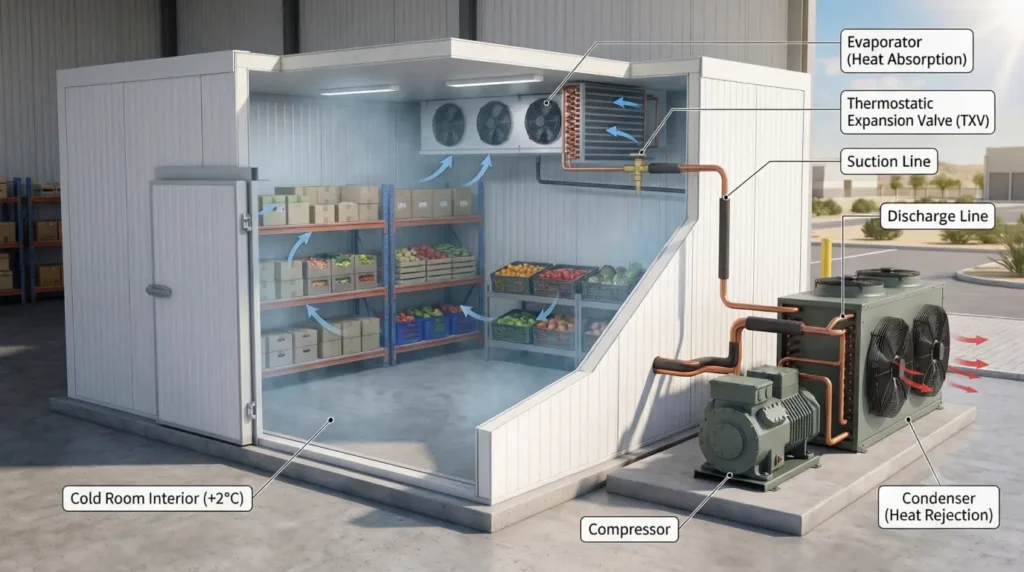
All cold storage systems operate using a closed refrigeration cycle that removes heat from inside the room and releases it outside.
Main Components
• Evaporator – absorbs heat inside the room
• Compressor – compresses refrigerant gas
• Condenser – releases heat outdoors
• Expansion valve – regulates refrigerant flow
Expert statement
“Refrigeration systems do not create cold; they remove heat from the storage environment.”
Refrigeration Load Calculation Explained
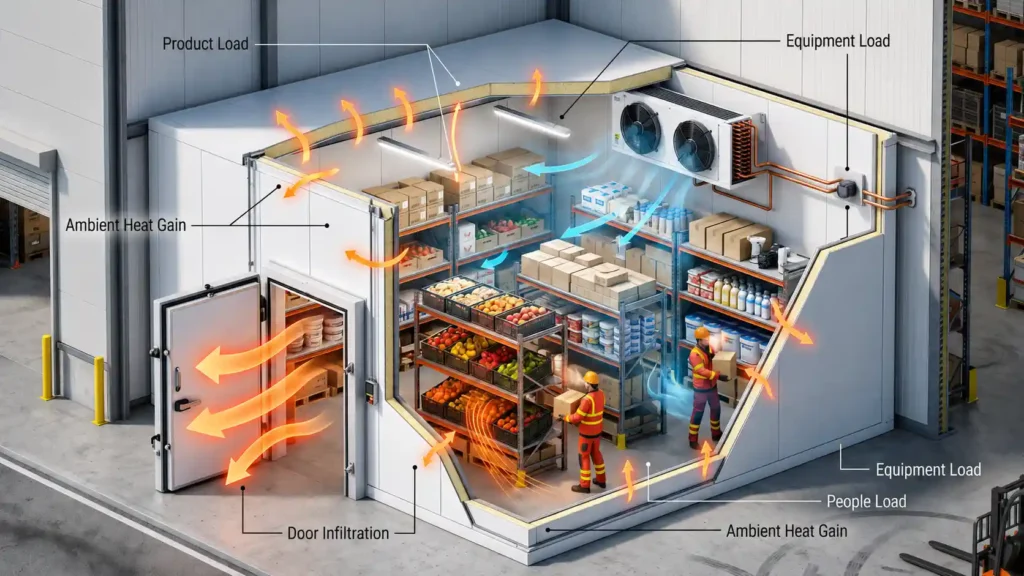
One of the most important engineering steps in cold storage design is heat load calculation.
Definition
Refrigeration load is the total amount of heat that must be removed from a cold room to maintain the desired temperature.
Major Heat Load Sources
Product Load
Heat is contained in stored products.
Ambient Heat Gain
Heat enters through walls and ceilings.
Infiltration Load
Warm air is entering through the doors.
Equipment Load
Lighting, motors, and machinery inside the room.
People Load
Workers are entering and leaving the storage space.
Incorrect refrigeration load calculation is the most common reason cold storage systems become inefficient. Experienced chiller room manufacturers in UAE perform detailed refrigeration load calculations to ensure the compressor capacity, evaporator performance, and insulation design match the operating environment.
Cold Storage Design Challenges in the UAE Climate
The extreme ambient temperatures in the UAE significantly impact refrigeration performance.
Summer temperatures frequently exceed 45°C, increasing condenser pressure and compressor workload.
Engineering Solutions
Professional refrigeration engineers typically implement:
• Oversized condensers
• High-efficiency compressors
• Thicker insulation panels
• Ventilated condenser locations
• High-capacity evaporators
In many cases, businesses require customised chiller room systems designed specifically for product type, storage volume, and operational workflow.
Expert insight
“Cold storage systems in desert climates require stronger heat rejection capacity than systems installed in moderate climates.”
Insulation Materials Used in Cold Rooms
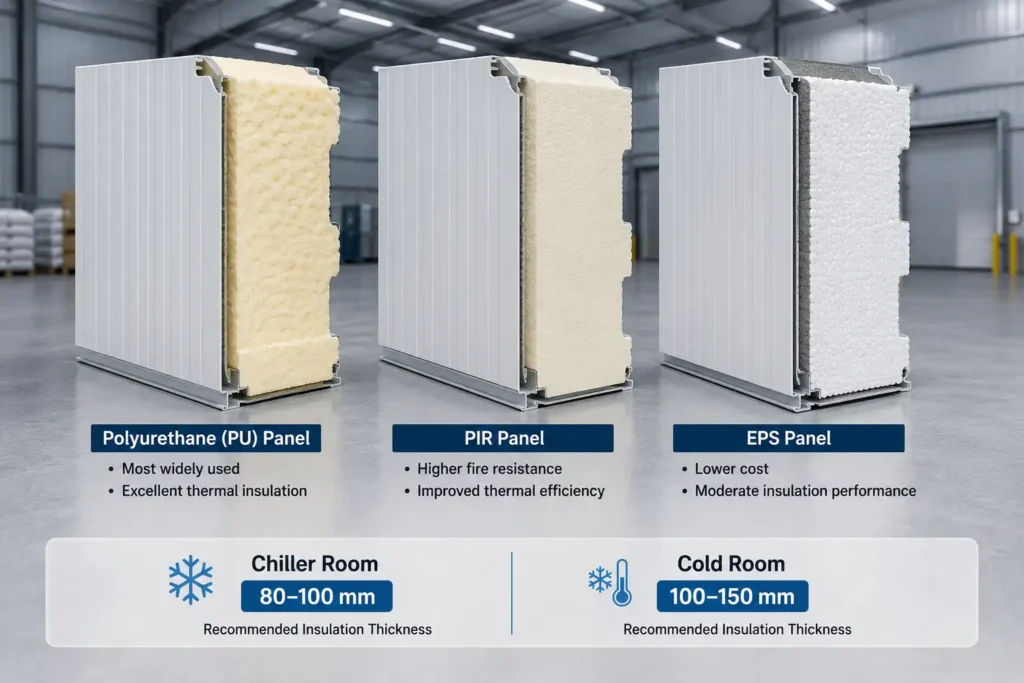
Insulation panels prevent heat from entering the refrigerated space.
Common Insulation Materials
Polyurethane (PU) Panels
The most widely used cold room insulation.
PIR Panels
Higher fire resistance and improved thermal efficiency.
EPS Panels
Lower cost but less thermal performance.
Typical Panel Thickness in UAE
Chiller rooms
80–100 mm
Cold rooms
100–150 mm
Humidity Control in Cold Storage
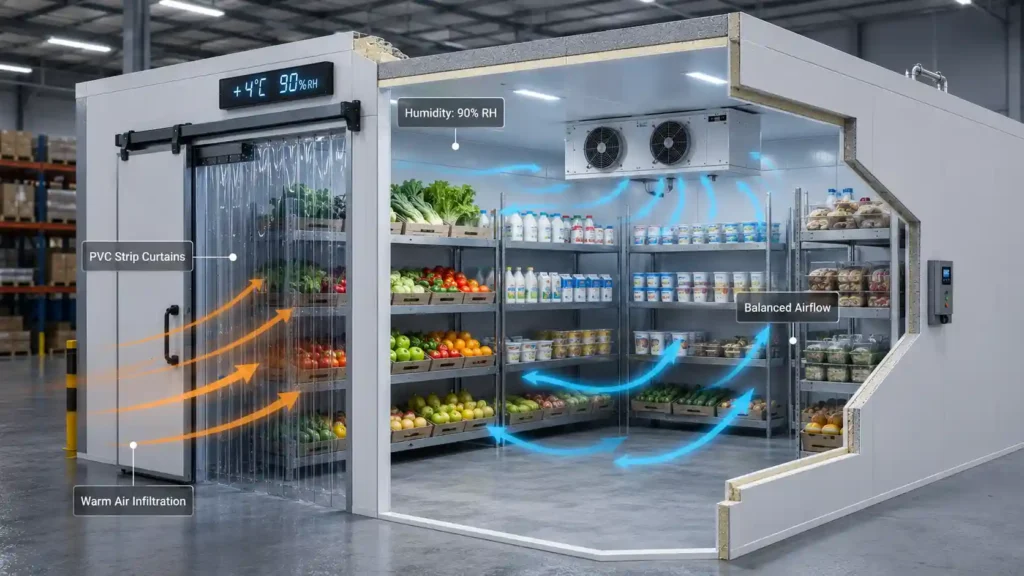
Humidity control is essential for preserving food quality.
Recommended Relative Humidity
Cold storage environments typically operate between:
80% and 95% relative humidity
Problems Caused by Incorrect Humidity
High humidity causes:
• Condensation
• Mold growth
• Ice formation
Low humidity causes:
• Product dehydration
• Weight loss in produce
Some businesses, especially event venues, temporary food storage operations, or seasonal distribution centers, may also rely on portable chiller units when a permanent cold storage installation is not required.
Door Design and Airflow Management
Cold storage doors significantly impact energy efficiency and temperature stability.
Common Door Types
• Hinged insulated doors
• Sliding cold room doors
• PVC strip curtains
• Air curtains
Strip curtains and air curtains help reduce warm air infiltration during frequent door openings.
Defrost Systems in Refrigeration
Evaporator coils accumulate frost over time.
Why Defrosting Is Important
Frost buildup blocks airflow and reduces cooling efficiency.
Common Defrost Methods
Electric Defrost
Heating elements melt the accumulated ice.
Hot Gas Defrost
Hot refrigerant gas melts frost quickly.
Off-Cycle Defrost
The compressor temporarily stops while the fans circulate warmer air.
Energy Efficiency in Modern Cold Storage Systems
Energy consumption is one of the highest operational costs for refrigeration systems in the UAE.
Technologies That Improve Efficiency
• Inverter compressors
• EC evaporator fan motors
• Smart refrigeration controllers
• High-efficiency refrigerants
Common Refrigerants
• R404A
• R134a
• R448A
Some new systems are adopting CO₂ refrigeration technology for improved sustainability.
Cold Chain Compliance in UAE
Cold storage systems used for food and pharmaceuticals must comply with international safety standards.
Major Compliance Standards
• HACCP food safety systems
• WHO cold chain guidelines
• Pharmaceutical GDP standards
Modern cold storage facilities often include:
• Temperature data loggers
• Remote monitoring systems
• Automatic temperature alarms
Key Takeaways
• Chiller rooms operate between 0°C and 5°C and are used for fresh food storage.
• Cold rooms operate between -5°C and 5°C and support broader industrial cold storage applications.
• Freezer rooms operate between -18°C and -25°C for frozen products.
• Proper refrigeration load calculation is critical for system efficiency.
• Extreme UAE temperatures require specialized refrigeration engineering design.
Expert Insights from Refrigeration Engineers
1. Most cold storage failures are design problems, not equipment failures.
Poor refrigeration load calculations often lead to oversized or undersized systems.
2. Insulation quality directly affects electricity consumption.
Higher-density insulation panels reduce compressor workload.
3. Door design significantly impacts temperature stability.
Frequent door openings can increase heat load by 20–30%.
4. Climate-specific engineering is essential in the UAE.
Refrigeration systems designed for Europe or Asia may struggle in desert climates.
Related Cold Storage Guides
If you’re exploring cold storage systems for your business, these expert guides explain important engineering and industry insights:
- Chiller Room vs Freezer Room: Complete Guide for UAE Businesses
- Pharmaceutical Cold Storage & Medical Chillers in UAE
- Why Chiller Rooms Fail in the UAE Climate
These articles explore refrigeration design challenges, industry standards, and engineering factors that impact commercial cold storage systems across the UAE.
Frequently Asked Questions
A chiller room operates between 0°C and 5°C and is used for fresh food storage, while a cold room can operate between -5°C and +5°C and is typically used for industrial cold storage.
Most commercial chiller rooms operate between 0°C and 5°C.
Common refrigerants include R404A, R134a, and R448A, depending on system design.
Cold room insulation typically ranges from 80 mm to 150 mm, depending on the storage temperature and climate conditions.
A professionally designed cold room can operate for 15 to 20 years with proper maintenance.
Electricity consumption depends on room size, insulation quality, compressor efficiency, and ambient temperature. In the UAE, a small commercial chiller room may consume 3–8 kWh per hour, while larger cold storage systems require higher refrigeration capacity due to extreme outdoor temperatures. Experienced chiller room manufacturers in UAE design energy-efficient systems using proper insulation, inverter compressors, and optimized airflow to reduce operating costs.
Most commercial cold room installations take 3 to 7 days depending on the room size, insulation panel installation, refrigeration system configuration, and electrical setup. Larger industrial cold storage facilities may require 2–3 weeks for full installation and commissioning. Professional chiller room manufacturers in Dubai typically perform site inspections and refrigeration load calculations before installation to ensure proper system performance.
Yes, in some cases, a cold room can be adjusted to operate as a chiller room by modifying the temperature control settings, evaporator capacity, and refrigeration configuration. However, the system must be evaluated by experienced chiller room manufacturers in UAE to ensure the refrigeration capacity, insulation, and airflow are suitable for chilled storage conditions.
Final Engineering Insight
In most cases, cold storage systems fail because of poor engineering design rather than equipment quality.
Key design mistakes include:
• Incorrect refrigeration load calculations
• Inadequate insulation for hot climates
• Poor airflow distribution
• Improper compressor selection
When engineered correctly, commercial cold storage systems can operate reliably for decades—even in extreme climates like the UAE
Cold Storage Engineering Expertise
Companies specializing in commercial refrigeration engineering, such as ChillerRoom.ae, design and install chiller rooms, freezer rooms, and industrial cold storage systems specifically for the extreme climate conditions of the UAE.
Proper refrigeration load calculations, insulation design, airflow management, and condenser performance are critical factors that determine whether a cold storage system operates efficiently for decades or fails prematurely.
Learn more about commercial refrigeration solutions at: